
ntroduction
Siemens SIMATIC PLCs have long been the backbone of industrial automation. The S7-300 and S7-400 series, introduced in the 1990s, were widely adopted for their reliability and modularity. However, with evolving technology and increasing demands for performance, diagnostics, and integration, Siemens introduced the S7-1200 and S7-1500 series, designed to meet modern automation needs. Migrating to these newer platforms ensures future-proofing, enhanced capabilities, and compatibility with the TIA Portal engineering environment.
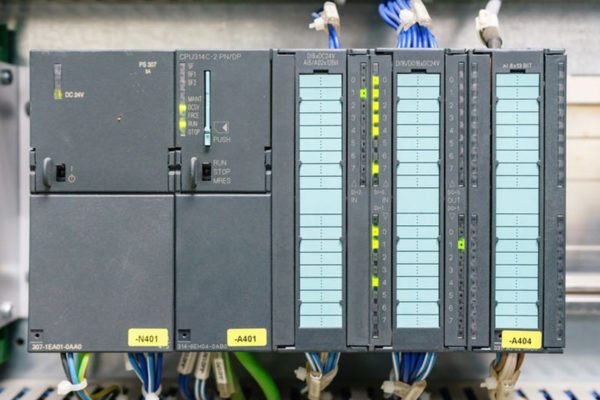
Overview of S7-300 and S7-400
- S7-300: Compact, modular PLCs used in mid-range applications. Known for flexibility and wide I/O support.
- S7-400: High-performance PLCs for large-scale and complex automation tasks. Offers extensive networking and redundancy options.
Key Features:
| Feature | S7-300 | S7-400 |
|---|---|---|
| Application | Medium-scale automation | Large-scale automation |
| Programming | STEP 7 (Classic) | STEP 7 (Classic) |
| Communication | PROFIBUS, MPI | PROFIBUS, Industrial Ethernet |
| Diagnostics | Basic | Advanced |
Why Upgrade to S7-1200 or S7-1500?
- S7-1200: Ideal for small to medium applications. Offers integrated PROFINET, web server, and security features.
- S7-1500: Designed for high-end automation. Provides faster processing, advanced diagnostics, and full TIA Portal integration.
Benefits of Migration:
- Improved Performance: Faster CPUs, better memory management.
- Advanced Diagnostics: Real-time error tracking and web-based monitoring.
- TIA Portal Integration: Unified engineering for PLC, HMI, and drives.
- Security: Built-in protection against unauthorized access.
- Scalability: Easier expansion and modular design.
Migration Process
- System Analysis:
- Document existing hardware (CPU, I/O modules, communication).
- Review software blocks and custom libraries.
- Project Conversion:
- Archive the STEP 7 project.
- Import into TIA Portal using the migration assistant.
- Hardware Mapping:
- Replace legacy CPUs with S7-1200 or S7-1500 equivalents.
- Reconfigure I/O addresses and modules.
- Software Adaptation:
- Adjust program blocks to match new architecture.
- Validate logic and test communication protocols.
- Testing and Commissioning:
- Simulate and verify system behavior.
- Deploy and monitor using TIA Portal diagnostics.
Challenges and Considerations
- Compatibility: Some legacy modules may not be supported.
- Training: Engineers must adapt to TIA Portal workflows.
- Downtime: Plan migration to minimize production impact.
Conclusion
Migrating from Siemens S7-300/S7-400 to S7-1200/S7-1500 is a strategic move toward modern, efficient, and secure automation. With careful planning and use of Siemens migration tools, industries can ensure a smooth transition and unlock the full potential of the TIA Portal ecosystem