
Introduction
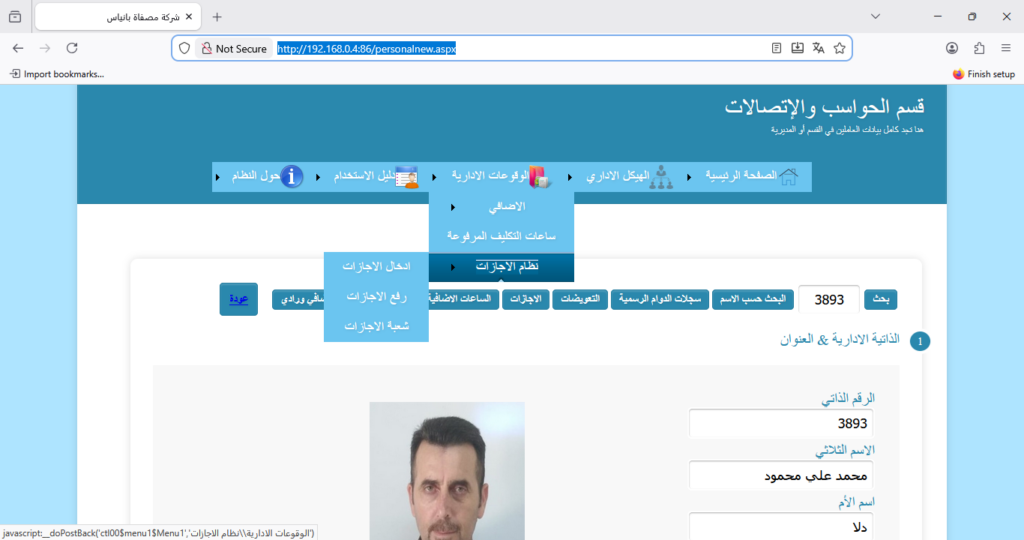
In today’s complex business environments, having an integrated administrative and financial system is essential for ensuring efficient and transparent operations. This article explains how to design a web application hosted on IIS (Internet Information Services) on Windows Server using C#. The system will manage both administrative and financial operations while ensuring data security and preventing unauthorized modifications.
System Overview
Main Goals
- Complete employee management from hiring to termination
- Hierarchical permission system matching the organizational structure
- Complete document workflow for employee leave requests
- Daily task and performance monitoring
- Financial compensation and incentive management
- Detailed reports for senior management
Technical Architecture
1. Development and Deployment Environment
- Server: Windows Server with IIS 10 or higher
- Programming Language: C# with ASP.NET MVC framework
- Database: SQL Server with encryption enabled
- Authentication: Windows Authentication integrated with Active Directory
2. Project Structure
HR-Finance-System/
├── Controllers/
│   ├── AccountController.cs
│   ├── EmployeeController.cs
│   ├── LeaveController.cs
│   ├── FinanceController.cs
│   └── ReportController.cs
├── Models/
├── Views/
├── Services/
├── Security/
└── Data/
Permission and Security System
Permission Model Design
public class Permission
{
    public int PermissionId { get; set; }
    public string ModuleName { get; set; }
    public bool CanView { get; set; }
    public bool CanCreate { get; set; }
    public bool CanApprove { get; set; }
    public bool CanDelete { get; set; }
}

public class Role
{
    public int RoleId { get; set; }
    public string RoleName { get; set; } // Department, Division, Employee
    public List<Permission> Permissions { get; set; }
}
Preventing Unauthorized Modifications
[AttributeUsage(AttributeTargets.Method | AttributeTargets.Class)]
public class AuditLogAttribute : ActionFilterAttribute
{
    public override void OnActionExecuted(ActionExecutedContext filterContext)
    {
        // Log all modification attempts
        var userName = filterContext.HttpContext.User.Identity.Name;
        var action = filterContext.ActionDescriptor.ActionName;
        var controller = filterContext.ActionDescriptor.ControllerDescriptor.ControllerName;

        AuditService.Log(userName, controller, action, DateTime.Now);

        base.OnActionExecuted(filterContext);
    }
}
Main System Modules
1. Employee Management Module
- Basic employee data: Personal information, qualifications, experience
- Career tracking: Promotions, transfers, training
- Attendance system: Integration with fingerprint systems
- Performance evaluation: Regular assessments with standard metrics
2. Leave Management Module
public class LeaveRequest
{
    public int LeaveId { get; set; }
    public int EmployeeId { get; set; }
    public LeaveType Type { get; set; }
    public DateTime StartDate { get; set; }
    public DateTime EndDate { get; set; }
    public string Reason { get; set; }
    public string AttachmentPath { get; set; }
    public LeaveStatus Status { get; set; }
    public List<Approval> Approvals { get; set; }
}

public enum LeaveStatus
{
    Pending,
    ApprovedByManager,
    ApprovedByHR,
    Rejected,
    Cancelled
}
3. Financial Compensation Module
- Basic salary calculation: Based on grade and base salary
- Overtime calculations: Automatic calculations based on attendance records
- Bonuses and incentives: Linked to performance evaluation
- Deductions: Legal and disciplinary deductions
4. Reporting and Monitoring Module
- Custom dashboards: For each management level
- Interactive reports: With filtering and export capabilities
- Automatic alerts: For violations and exceptions
Technical Challenges and Solutions
Challenge 1: Difficult Work Environment
Solution: Design simple interfaces that work with intermittent connectivity
public class OfflineSyncService
{
    public void SyncPendingOperations()
    {
        // Sync pending operations when connection is restored
        var pendingOperations = GetPendingOperations();
        foreach (var operation in pendingOperations)
        {
            ProcessOperation(operation);
        }
    }
}
Challenge 2: Complex Leave Workflow
Solution: Flexible, configurable workflow engine
public class WorkflowEngine
{
    public ApprovalProcess CreateLeaveApprovalProcess(Employee employee)
    {
        var process = new ApprovalProcess();

        // Build workflow dynamically based on company policy
        if (employee.Department == "Management")
            process.AddStep(new DirectorApproval());
        else
            process.AddStep(new ManagerApproval());

        process.AddStep(new HRApproval());
        return process;
    }
}
Challenge 3: Security and Tamper Prevention
Solution: Multi-level verification system
[Authorize(Roles = "FinanceManager")]
[AuditLog]
public class FinanceController : Controller
{
    [HttpPost]
    [ValidateAntiForgeryToken]
    public ActionResult UpdateSalary(EmployeeSalary model)
    {
        if (!ModelState.IsValid)
            return View(model);

        // Additional policy verification
        if (!SalaryPolicy.CanUpdate(User, model))
            return new HttpStatusCodeResult(403);

        _salaryService.UpdateSalary(model);
        return RedirectToAction("Index");
    }
}
Advanced System Features
1. Notification System
- Instant notifications for pending approvals
- Deadline alerts
- Salary and incentive notifications
2. Email and Integration
- Automatic confirmation emails
- Integration with internal mail system
- SMS notifications for critical operations
3. Backup and Recovery
- Automatic daily backups
- Data recovery capability
- Complete audit logs
Performance Considerations
Database Performance Optimization
public class OptimizedQueryService
{
    public PagedResult<Employee> GetEmployees(int page, int pageSize)
    {
        using (var context = new HRContext())
        {
            return context.Employees
                .Include(e => e.Department)
                .Include(e => e.Position)
                .OrderBy(e => e.LastName)
                .ToPagedResult(page, pageSize);
        }
    }
}
Handling Concurrent Load
- Use Output Caching for static data
- Implement caching patterns
- Load balancing across multiple servers
Conclusion
The proposed system offers a complete solution for financial and administrative management in complex work environments, focusing on:
- Security: Through strict permission systems and audit logs
- Flexibility: In handling changing policies and procedures
- Efficiency: In managing daily operations and financial transactions
- Transparency: In tracking performance and operations
The system’s success depends on careful deployment planning, training, and continuous technical support, while ensuring full compliance with company policies and regulations.
Future Recommendations
- Mobile app support
- Integration with existing ERP systems
- Predictive analytics using AI
- Multi-language support for international companies
This system represents a strategic investment in transforming administrative and financial processes into effective digital operations, contributing to improved productivity and informed decision-making.