
A Historical Perspective on an Early Generation of Modern Distributed Control Systems
Emerson’s DeltaV Distributed Control System (DCS) has long been recognized as one of the most influential automation platforms in the process industries. While today’s plants rely on advanced DeltaV versions with digital twins, cloud integration, and high‑performance HMIs, the older DeltaV Version 6 played a foundational role in shaping the modern automation landscape. It represented a major step forward in usability, simulation, and operator training—capabilities that later evolved into the sophisticated DeltaV Mimic and lifecycle management tools seen today.
1. Introduction to DeltaV Version 6
DeltaV Version 6 emerged during a period when industrial automation was transitioning from traditional, hardware‑heavy systems to more software‑driven, integrated architectures. Emerson’s goal was to simplify engineering, improve operator performance, and reduce lifecycle costs. Version 6 introduced early forms of simulation, modular configuration, and integrated diagnostics—features that later became standard in advanced DCS platforms.
Although the modern references to “Version 6” in search results relate to DeltaV Mimic dynamic simulation software, the roots of these capabilities trace back to the original DeltaV Version 6 DCS, which laid the groundwork for simulation‑driven engineering and training.
2. Key Features and Innovations in DeltaV Version 6
a. Early Simulation and Training Tools
DeltaV Version 6 included one of the earliest integrated simulation environments. This concept later evolved into DeltaV Mimic, which in its modern Version 6.LTS provides digital twin capabilities and enterprise‑wide collaboration tools.
The original version allowed engineers to test logic, train operators, and validate control strategies before commissioning—reducing project risk and cost.
b. Simplified Engineering Environment
Version 6 introduced a more intuitive configuration interface compared to earlier DCS systems. Engineers could build control modules, graphics, and alarms using drag‑and‑drop tools. This reduced engineering hours and made the system more accessible to technicians and operators.
c. Integrated Diagnostics
One of the strengths of DeltaV has always been its built‑in diagnostics. Version 6 provided early versions of device status monitoring, communication health checks, and controller diagnostics—features that helped maintenance teams quickly identify and resolve issues.
d. Modular and Scalable Architecture
DeltaV Version 6 supported modular expansion, allowing plants to start small and grow over time. This flexibility made it popular in industries such as oil & gas, refining, petrochemicals, and power generation.
e. Foundation for Digital Twin Technology
Modern DeltaV Mimic Version 6.LTS focuses heavily on digital twin simulation, collaboration, and eliminating data silos.
These advanced capabilities trace their origins back to the simulation and testing tools introduced in the early DeltaV Version 6 DCS.
3. Impact on Industry
DeltaV Version 6 played a major role in shifting the industry toward:
- Simulation‑driven engineering
- Operator training systems (OTS)
- Integrated control and safety systems
- Lifecycle management and change tracking
- User‑friendly configuration environments
These innovations helped reduce commissioning time, improve operator readiness, and increase plant reliability.
4. Limitations of the Old Version
As with any early-generation system, DeltaV Version 6 had limitations:
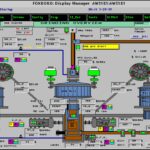
- Limited graphics and HMI capabilities compared to modern high‑performance HMIs
- Less powerful controllers and slower processing
- No native virtualization or cloud integration
- Early simulation tools lacked the realism of today’s digital twins
- Limited cybersecurity features compared to modern standards
Despite these limitations, Version 6 was considered advanced for its time and set the stage for future releases.
5. Legacy and Evolution
The evolution from DeltaV Version 6 to today’s advanced DeltaV systems—including Mimic Version 6.LTS—shows Emerson’s long‑term commitment to innovation. Modern versions now include:
- Digital twin simulation across the enterprise
- Enhanced collaboration tools for engineering teams
- Advanced operator performance analytics
- High‑performance graphics
- Cloud‑ready architectures
These advancements build directly on the foundations laid by the early DeltaV versions.
6. Conclusion
DeltaV Version 6 represents an important milestone in the history of industrial automation. It introduced early simulation tools, simplified engineering, and integrated diagnostics—capabilities that transformed how plants design, operate, and maintain control systems. While modern DeltaV versions are far more advanced, the innovations introduced in Version 6 continue to influence today’s digital automation strategies.