
Introduction
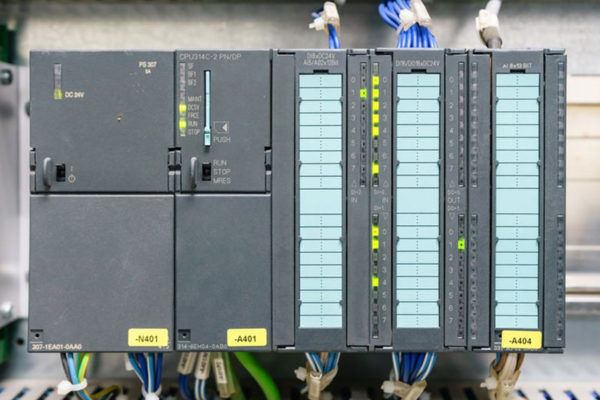
Siemens SIMATIC PLCs have long been the backbone of industrial automation. The S7-300 and S7-400 series, introduced in the 1990s, were widely adopted for their reliability and modularity. However, with evolving technology and increasing demands for performance, diagnostics, and integration, Siemens introduced the S7-1200 and S7-1500 series, designed to meet modern automation needs. Migrating to these newer platforms ensures future-proofing, enhanced capabilities, and compatibility with the TIA Portal engineering environment.
Overview of S7-300 and S7-400
- S7-300: Compact, modular PLCs used in mid-range applications. Known for flexibility and wide I/O support.
- S7-400: High-performance PLCs for large-scale and complex automation tasks. Offers extensive networking and redundancy options.
Key Features:
| Feature | S7-300 | S7-400 |
|---|---|---|
| Application | Medium-scale automation | Large-scale automation |
| Programming | STEP 7 (Classic) | STEP 7 (Classic) |
| Communication | PROFIBUS, MPI | PROFIBUS, Industrial Ethernet |
| Diagnostics | Basic | Advanced |
Why Upgrade to S7-1200 or S7-1500?
- S7-1200: Ideal for small to medium applications. Offers integrated PROFINET, web server, and security features.
- S7-1500: Designed for high-end automation. Provides faster processing, advanced diagnostics, and full TIA Portal integration.
Benefits of Migration:
- Improved Performance: Faster CPUs, better memory management.
- Advanced Diagnostics: Real-time error tracking and web-based monitoring.
- TIA Portal Integration: Unified engineering for PLC, HMI, and drives.
- Security: Built-in protection against unauthorized access.
- Scalability: Easier expansion and modular design.
Migration Process
- System Analysis:
- Document existing hardware (CPU, I/O modules, communication).
- Review software blocks and custom libraries.
- Project Conversion:
- Archive the STEP 7 project.
- Import into TIA Portal using the migration assistant.
- Hardware Mapping:
- Replace legacy CPUs with S7-1200 or S7-1500 equivalents.
- Reconfigure I/O addresses and modules.
- Software Adaptation:
- Adjust program blocks to match new architecture.
- Validate logic and test communication protocols.
- Testing and Commissioning:
- Simulate and verify system behavior.
- Deploy and monitor using TIA Portal diagnostics.
Challenges and Considerations
- Compatibility: Some legacy modules may not be supported.
- Training: Engineers must adapt to TIA Portal workflows.
- Downtime: Plan migration to minimize production impact.
Conclusion
Migrating from Siemens S7-300/S7-400 to S7-1200/S7-1500 is a strategic move toward modern, efficient, and secure automation. With careful planning and use of Siemens migration tools, industries can ensure a smooth transition and unlock the full potential of the TIA Portal ecosystem.


Excellent pieces. Keep writing such kind of information on your
blog. Im really impressed by your site.
Hey there, You’ve performed a fantastic job. I will definitely digg it and
in my view recommend to my friends. I am sure they will be
benefited from this site.